
Executive Summary
Most losses are preventable, but only if the notice and records discipline is built into delivery, not left to close-out.
Missed notice periods, incomplete records, late submissions, and a failure to understand the contractual mechanism are the most common culprits. The financial consequences are direct: unrecovered variations erode project margin and can convert a profitable contract into a loss.
This article is for CEOs, General Managers, Commercial Managers, Project Directors, and Contract Administrators who are responsible for protecting contractor-side commercial outcomes under Australian and New Zealand contracts.
Industry Context
A Growing Problem Across the Sector
Australia and New Zealand’s infrastructure pipeline has expanded significantly, driven by government investment in transport, water, energy, and social infrastructure. With that growth has come greater project complexity — tighter programmes, multi-party interfaces, evolving scope, and procurement models that push risk further down the contracting chain.
Variation disputes are now among the most common sources of construction claims and commercial management failures on major projects. Several factors are driving this:
- D&C and EPC contracts are increasingly common, placing greater scope risk on contractors and creating frequent disagreements about what is ‘in scope’.
- Principal-supplied information is often incomplete or inaccurate, resulting in scope changes that contractors must absorb or fight to recover.
- Commercial teams are under-resourced relative to project scale, with contract administration receiving less priority than programme delivery.
- Principals are applying stricter compliance requirements, with little tolerance for procedural shortcomings.
Why Principals Are Stricter Now
Budget scrutiny, governance requirements, and audit obligations mean Principal organisations face internal pressure to reject claims that are not procedurally compliant — even when the underlying entitlement is not in dispute. A superintendent assessing a variation claim will often apply the contract strictly because their own reporting obligations require it. The result: a contractor with a legitimate entitlement loses because the paperwork was not in order.
A typical failure sequence looks like this: a site instruction is given verbally at a weekly progress meeting. The contractor performs the work. Fourteen days pass. The contract required written notice within 14 days. The superintendent’s assessment, prepared four months later, rejects the claim on notice grounds. The cost has already been incurred.
Relevant Contract Frameworks
The issue arises across all major standard form contracts used in the region:
- AS 2124 – 1992 and AS 4000 – 1997 — widely used on state government and local authority projects, both with prescriptive notice regimes.
- NZS 3910 and NZS 3916 — New Zealand equivalents, with similar time-bar and substantiation obligations.
- GC21 (NSW Government) and other bespoke Principal-drafted forms — often with stricter notice requirements and narrower valuation methodologies.
- D&C and EPC contracts — where scope disputes are endemic and client-directed changes are common.
Across all of these forms, the pattern is the same: notice, substantiation, valuation method, and time bars. If you understand those four elements under your contract, you understand your risk.
Where Entitlement Is Lost
The diagram below maps the variation process from trigger event to resolution. Each red callout marks a failure point — every one of which is a controllable risk.
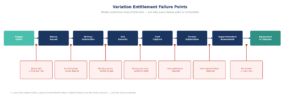
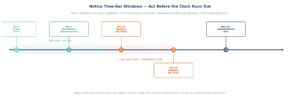
Notice deadlines are not negotiable. Once the clock has run, the entitlement is generally gone — regardless of how legitimate the claim.
Key Risks for Contractors
Losing variation entitlement is rarely sudden. It happens gradually — through process failures that accumulate until recovery becomes difficult or impossible.
| Risk | Commercial Impact |
|---|---|
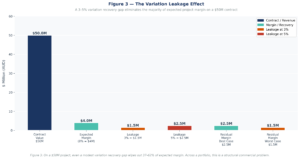
| Profit Leakage | Unrecovered variations go directly to the bottom line. On a $50M project, even a 3–5% variation recovery gap wipes out 37–62% of expected project margin. Across a portfolio, this is a structural problem. |
| Time-Bar Exposure | Most contracts require written notice within 14 to 28 days of the trigger event. Failure to comply can extinguish entitlement entirely — regardless of whether the work was performed. |
| Evidence Gaps | Variations without contemporaneous records — site diaries, instructions, RFIs, photos, cost codes — become difficult to value and easy to dispute. Principals will challenge quantum when supporting evidence is thin. |
| Contractual Traps | ‘No variation without written instruction’ clauses, deemed acceptance provisions, and ‘value engineering’ clauses are frequently triggered inadvertently, narrowing the scope of recoverable claims. |
| Scope Creep Absorption |
In D&C and EPC projects, contractors often absorb additional work under the mistaken belief that it falls within their design responsibility, when it represents a client-directed change. |
| Delay and Disruption Linkage |
Unrecovered variations carry associated delay and disruption costs. Lose the variation, and the extension of time and delay costs are usually lost too. |
Practical Guidance
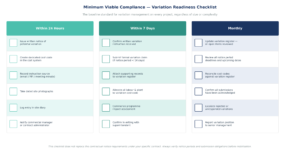
Managing variation entitlement requires discipline at every phase. The actions below are structured around three phases: before works commence, during construction, and after completion.
Before Works Commence — Know Your Contract Before the First Shovel
- Conduct a contract risk review. Identify every clause affecting variation entitlement: notice periods, written instruction requirements, valuation methods, time-bars. Brief your commercial and site teams before mobilisation — not after the first variation arises.
- Build your variation register on day one. Implement the register before any variations arise. Define ownership, templates, submission timelines, and approval workflows.
- Set up cost codes aligned to potential variation events. If a variation arises and there is no cost code to capture it, the cost will be pooled and lost. Establish codes at mobilisation.
- On D&C contracts: document scope ambiguities at the outset. Any gaps or inconsistencies in Principal-supplied documentation should be formally notified at contract commencement — this creates the foundation for future claims.
During Construction — Do This Every Week
- Issue notice immediately. Do not wait until the full scope is known. Issue a notice of potential variation as soon as the trigger event occurs. Notice first. Quantify later.
- Separate scope-in from scope-out work. Train site teams to flag when work is outside the original scope. Cost-code it, diary it, photograph it, and raise a variation — even if the Principal disputes entitlement.
- Maintain a programme and resource record alongside variations. You need this to support delay and disruption claims if the variation is contested.
- Escalate disputes without delay. If a variation is rejected or ignored, follow the contractual dispute process immediately. Waiting weakens your position.
After Completion — Close Out, Don’t Give Up
- Compile a structured variation account. Consolidate all open variations, valuations, and supporting documents into a claim package clearly cross-referenced to contract clauses and evidence.
- Engage specialist advisors for material claims. Complex variations — particularly those involving delay and disruption, scope disputes, or D&C interface claims — benefit from independent commercial and quantum expertise.
- Negotiate before you dispute. A well-prepared commercial position, presented professionally, frequently resolves claims without formal dispute — saving time, cost, and the commercial relationship.
What Good Evidence Looks Like
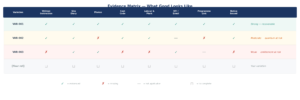
The evidence matrix below sets out what a well-managed variation looks like in terms of record-keeping. If your variations don’t look like VAR-001, the quantum is at risk.
Three real-world examples that cost contractors entitlement:
Verbal instruction problem: A superintendent verbally directed additional earthworks at a site meeting. No written confirmation was issued. The contractor performed the work and submitted a variation 30 days later. The Principal rejected the claim: “No written instruction was issued, and the notice was out of time under Clause 36.” $280,000 lost.
Late notice rejection: A contractor identified a scope change on Day 3 but waited until the weekly commercial meeting on Day 10 to raise it. The contract required notice within 7 days. The superintendent’s assessment noted: “Notice was issued 3 days after the contractual deadline. Entitlement not established.”
Weak cost code issue: A contractor claimed $420,000 for design variations under a D&C contract but had pooled all design costs into a single cost centre. Unable to segregate variation costs from base contract costs, the claim was reduced by 60% on quantum grounds — despite the entitlement being accepted.
Case Example
Scenario: Civil Infrastructure Contractor — Major Road Corridor (D&C)
The Situation
A mid-tier civil contractor was delivering a D&C road corridor under a bespoke Principal-drafted contract. Throughout the project, the Principal issued design direction letters, stakeholder-driven scope changes, and utility conflict directives. Site teams absorbed and delivered without raising formal variation claims. The commercial team was understaffed. Notices were either not issued or issued late.
By practical completion, the contractor held an internal view that approximately $4.2M in additional work had been performed beyond the original scope.
The Consequences
The Principal rejected $3.1M of claimed variations: late notices under the 14-day clause, absence of written instructions, and lack of cost records. The contractor faced the choice of accepting margin erosion or formal dispute — at project close-out, with depleted records and an exhausted commercial team.
How PCAG Improved the Outcome
PCAG conducted an entitlement audit, identifying which variations had arguable notice compliance, which could be framed as contract ambiguities (not requiring a variation notice under the applicable clause), and which were supported by sufficient evidence to sustain valuation.
A structured claim package was prepared, with supporting evidence mapped directly to each entitlement ground. A negotiation strategy was developed that prioritised the strongest claims and framed a commercial resolution. The result: $2.4M recovered. The remaining $700K was conceded on notice grounds — a direct cost of the original contract administration failures.
How PCAG Adds Value
Contractors who engage specialist advisors early — at contract award, not at dispute — consistently achieve better commercial outcomes. Here is what specialist advisory support delivers in practice:
Risk Identification
PCAG reviews the contract and produces a clause matrix and notice workflow — a single-page reference that maps every variation-related obligation, deadline, and risk to the responsible person on your team. Most commercial teams have never seen their contract laid out this way.
Claim Readiness
We implement a variation register and evidence index that is maintained throughout the project — not compiled at close-out. When a dispute arises, a claim-ready contractor holds the commercial position from the first meeting.
Negotiation Leverage
We prepare a position paper and quantum build-up that presents your claim in contractual and commercial terms, with evidence mapped to each element. Principals respond differently to a structured, evidence-backed position than to an informal demand.
Dispute Avoidance
Where resolution cannot be reached at project level, we prepare an executive options paper and settlement pathway — a clear-eyed analysis of what is recoverable, what the risks of escalation are, and what a commercially rational outcome looks like. The goal is always resolution without formal dispute.
Key Takeaways
Notice first. Quantify later.Most variation entitlement is lost through late or missing notices — not through lack of genuine entitlement. Issue notice the moment you identify the trigger event, even if the full scope is unknown.
If it isn’t recorded, it didn’t happen.Contemporaneous site diaries, cost codes, photos, and written instructions are the only evidence that survives a dispute. Build record-keeping into your delivery culture from day one.
D&C contracts carry the highest variation risk.Scope disputes are endemic in design-and-construct delivery. Treat every client direction as a potential variation. Notice it, cost-code it, claim it — even when the Principal pushes back.
Lose the variation, lose the delay claim too.Delay and disruption costs follow variations. Unrecovered variations rarely come alone. Manage variation and programme impact claims together.
Early advisory support delivers the highest return.Engaging PCAG at contract award — not at dispute — is the most cost-effective commercial management decision available to contractors on complex infrastructure projects.
Is your project losing variation entitlement?
If you have variations being rejected, notice periods under pressure, or scope creep being absorbed, PCAG can review your register and submissions and tell you — quickly — what is recoverable and what must be fixed now.
Contact PCAG today. | pcag.com.au | Analysis | Solutions | Results